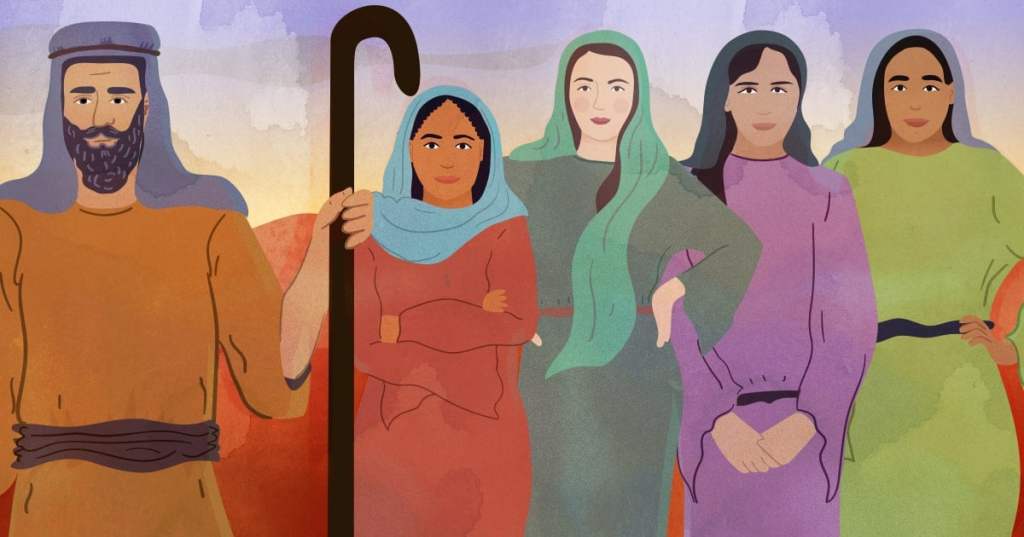
It’s Bilhah Zilpah time!
If you’re reading along in the triennial portion, there are two focal lines that start to reveal Bilhah and Zilpah. These lines happen in the dramatic confrontation between Yaakov (Jacob) and Lavan that has been brewing over the previous twenty years. A moment catalyzed by Yaakov finally finding a way to leave and return home at the behest of God. During the encounter, in Breishit (Genesis) 31:43, Lavan declares he owns everything after searching for his stolen terafim hidden under a Rachel who uses menstruation to avoid detection.
וַיָּבֹ֨א לָבָ֜ן בְּאֹ֥הֶל יַעֲקֹ֣ב ׀ וּבְאֹ֣הֶל לֵאָ֗ה וּבְאֹ֛הֶל שְׁתֵּ֥י הָאֲמָהֹ֖ת וְלֹ֣א מָצָ֑א וַיֵּצֵא֙ מֵאֹ֣הֶל לֵאָ֔ה וַיָּבֹ֖א בְּאֹ֥הֶל רָחֵֽל׃
Breishit 31:33 reveals Lavan entering Yaakov’s tent, Leah’s tent, and the tent of the two slaves. Not finding it Lavan leaves Leah’s tent and enters Rachel’s tent.
Imagining the everyday realities of these different near-eastern biblical scenes can organically bring a lot to our connection to the text. Are these the same tents that were used back in Padan Aram, but quickly erected while journeying? Why is Lavan noted as entering the tent of Bilhah and Zilpah, then leaving Leah’s tent… do they have quarters secluded inside of Leah’s space? Why do Bilhah and Zilpah share a tent?
Trying to visualize how Bilhah and Zilpah lived, what activities occupied their days, and how they endured the oppressive systems controlling them bring to mind the ways that photographs can be used to explore the lived realities of people obscured throughout history. One can’t assume that an image featuring the focused community is representative. Consideration of why the image was created and messaging motive should be considered. Yet, images do capture certain realities of the moments they are created in. And, sometimes, in the background, reality is unintentionally immortalized in ways that support future excavating.
This approach can be applied to the Torah. In essence we learn that Zilpah and Bilhah appear to be sharing a tent while Leah and Rachel occupy their own tent. Does this relate to the status of Bilhah and Zilpah in this moment of the story? Where and how are other enslaved women housed, or unhoused? There is a potential reading that Bilhah’s and Zilpah’s secondary status, whether as wives or enslaved women, warranted second class housing. However, one empowered reading brought in during a previous Bilhah Zilpah Project session was consideration that Bilhah and Zilpah might choose co-housing as a way to increase safety for each other. While each woman navigated her own reality in a challenging realm, there is opportunity for midrashic insight into potential sisterhood between Zilpah and Bilhah with Leah over Rachel in that Leah felt unloved and may have found solidarity in some semblance of second-wife status despite being the first one married to Yaakov.
אִם־תְּעַנֶּ֣ה אֶת־בְּנֹתַ֗י וְאִם־תִּקַּ֤ח נָשִׁים֙ עַל־בְּנֹתַ֔י אֵ֥ין אִ֖ישׁ עִמָּ֑נוּ רְאֵ֕ה אֱלֹהִ֥ים עֵ֖ד בֵּינִ֥י וּבֵינֶֽךָ׃
The second line invoking Bilhah and Zilpah in this year’s triennial reading is the line that Rashi bases his attribution of Zilpah and Bilhah being daughter of Lavan through another enslaved woman, noting that Breishit 31:50 uses ‘my daughters’ twice. Four sisters navigating marriage to the same man offers an interesting framework for considering the interpersonal dynamics of this narrative. Sisters given as wedding gifts brings in additional historical examples endured by enslaved women in other periods as an invitation to bridge the power of the Torah throughout time.
A lingering question remains of how Lavan used Bilhah and Zilpah as enslaved women before giving them to Rachel and Leah. Assuming Lavan was sexually involved with their mother does not preclude Lavan potentially interacting sexually with Zilpah and Bilhah in a narrative where Yaakov has been sent to marry his cousin. Here too, historical examples can shed light on what humanity is capable of and therefore, what we may encounter within the Torah. One historic examples with the similarity of one man married to two enslaved sisters is recorded in an entry of the Underground Railroad Records by William Still: Slave-Holder in Maryland With Three Colored Wives.

While Zilpah and Bilhah are present during the next five consecutive parshiot, they are completely voiceless. We need the Torah and the Torah needs us to continually seek to connect and make meaning that bridges the Torah to today. We are each represented there, in part or in whole representations of characterizations. Tapping into ubiquitous wisdom from history and our personal lives is a powerful way to listen for Bilhah and Zilpah whispering to us, an ever-present invitation to support ongoing efforts in surviving marginalization, realizing abolition, and finding sisterhood.
May we listen for and hear their voices.
There is more Bilhah Zilpah Homecoming to experience! Register and join us for Witnessing Biblical Matriarchs on Sunday December 8, when we will connect with unexplored relationships between named and unnamed women in the story through creative midrash and set the foundation for ritual development; Witnessing Modern Matriarchs on Sunday December 22, which will link biblical matriarchs with historic and modern women and issues; and Weaving Matriarchal Legacies on Sunday December 29, where we will look to the generations and stories continuing to be woven together and return to ritual opportunities. We would love to study with you!

 Jews of Color Sanctuary