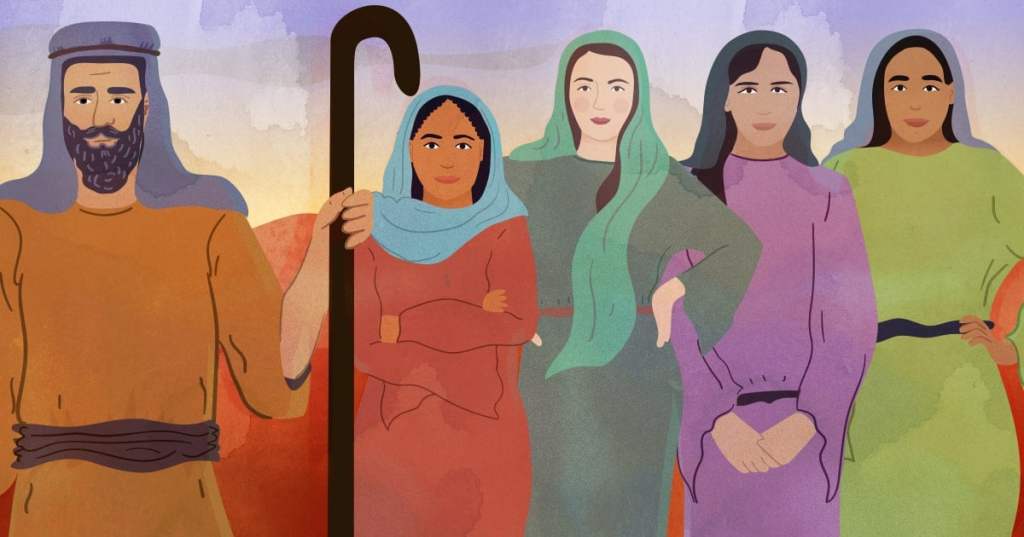
BILHAH & ZILPAH ENTER: A HOMECOMING CELEBRATION – VAYEITZEI

Shavua tov and welcome back into what I now think of as Bilhah Zilpah season. This is the first weekly email of this Bilhah Zilpah Project event which will serve both as some recap of our sweet five-year anniversary celebration and juicy text study.

While the idea persists that we completely regenerate every seven years, that’s not the scientific consensus. According to research, our bodies replace many of their nearly 30 trillion human cells regularly. About 330 billion of those cells are replaced every day. Certain cells in some organs and systems in your body are totally replaced in a matter of months, but others remain much the same as they were on the day you were born.

That said, we each have experienced a year of life that has brought us to the moment and place where we stand today. Figuratively new people, even if not cellularly. This is one of the things I love about studying the Torah. It remains ever-alive, receiving us as we grow and change. Revealing more along our journey through lines that never change.

The bible is split into sections that are read at the same time each year. These biblical sections, called parasha (singular) / parshiot (plural), are named by their first word. Parashat Vayeitzei, which will be read community-wide this coming Shabbat, is named after it’s opening word וַיֵּצֵ֥א (Vayeitzei) He went out…, and is the story of Yaakov leaving home and starting a family.

Toldot, the parasha before Vayeitzei, read this past Shabbat, ends with Yaakov stealing his brother’s (Esav) birthright. Fearing that Esav will kill him, Yaakov is sent from his father’s home in Be’er Sheva to his maternal grandfather’s (Nahor) house in Harran, a city in Padan Aram, with instructions to choose a wife from his maternal uncle’s (Lavan) daughters. A lot of this drama is orchestrated by his mother.

Along the journey Yaakov has a vision of generations as numerous as dust, inheriting land, and becoming a blessing to his people. Arriving at the town well, Yaakov kisses and falls in love with Rachel and works seven years to marry her. Lavan marries Yaakov to Leah instead because she is older and well, Lavan is… let’s say crafty (directing the drama, like his sister). Yaakov is angry but agrees to work another seven years for Rachel.

Breishit (Genesis) 29:22-23 reveal that Lavan hosted a wedding party, where a lot of drinking was enjoyed, before taking Leah in the evening to the bridal tent and Yaakov came in to her. This is the framing of how we meet, first Zilpah, and then Bilhah. Although, it’s unclear if another party was gathered to celebrate the marriage to Rachel, the bride price of labor was exchanged.

Was Zilpah escorted over alongside Leah? Did Bilhah accompany Rachel? Or was this presentation of wedding gifts delivered separately? Was this a ritualized way of giving gifts? How do these lines relate to the custom of fathers walking daughters down wedding aisles or the custom of חֶדֶר יִיחוּד (cheder yichud) room of privacy where a newly married couple spends several minutes alone together.

I have long nurtured the reading that Zilpah and Bilhah being introduced in this way is foreshadowing of their becoming wives. A trace of ceremony in the absence of dowry or consent. Breishit 29:24 and 29:29 tell us that Lavan was giving his own slaves to his daughters. However, by the end of both verses, the second mention of בִתּ֖וֹ שִׁפְחָֽה (veto shifkha) his daughter as a slave / לָ֖הּ לְשִׁפְחָֽה (la l’isha) to her as a slave, could refer to Zilpah and Bilhah or Leah and Rachel. This treatment of women, including his daughters, could be in line with how Lavan is characterized. This is potentially reinforced in Breishit 31:14-15 when Rachel and Leah wonder if their worth has been used up or whether they are still valuable in the eyes of their father, as well as when Lavan catches up to the departing family when he declares ownership of everything in Breishit 31:43.

My years of scholarship has cultivated deep curiosity about the effective difference in status between Bilhah or Zilpah and Rachel or Leah. Given shifts in their role/status and owner, the nature of Bilhah’s and Zilpah’s enslavement is also a question. What was the nature of their service to Lavan? This is compounded through the usage of וַיִּתֵּ֤ן (vayitain) gave, a word I understand as gift, conflated in a transactional framework.

Vayeitzei, the parasha when Bilhah and Zilpah return to the narrative each year, is the where the central lines that evoke them consecutively reside: Breishit 30:3-30:13. While wealth is named elsewhere as cattle, slaves, and silver or gold, these lines highlight the currency of children. A commodity that left Leah feeling unvalued despite providing six valued sons and a lone named daughter. The lack of which made Rachel feel unfulfilled despite having Yaakov’s heart. Amidst the war raging between Rachel and Leah, Bilhah and Zilpah find ways to navigate their shifting status between slave, wife, and concubine AND maintain relationships with their children who are always attributed to them.

We are more than our circumstances. Bilhah and Zilpah were more than enslaved people, used as a sexual trade to be stripped of the wealth created through their bodies. We can read Bilhah and Zilpah as multidimensional characters who found ways to navigate the realities of their lives. As women who existed within relationships and left a wealth of legacies behind that help us navigate and enrich our lives today.

As Vayeitzei closes, Bilhah and Zilpah go out into the world—at least encountering the world between Padan Aram and Hakhanim in their traveling, dwelling, and working… and that is where we will dive into next…

How do you see the story…?

After our reading of Torat Bilhah v’Zilpah, we journaled on one of the following prompts:

  • Why and how are Bilhah or Zilpah meaningful for you or what is a lesson they help you learn?
  • What has going out meant for you in your life?
  • What homecomings have you experienced?
  • What makes a homecoming special/meaningful?
  • Imagine elements to welcome Bilhah and Zilpah grounded in your understanding of the text?
  • Where would Bilhah and Zilpah return to and who would welcome them?

NOTE: the last prompt came from a participant through chevruta and group conversation.

There is more Bilhah Zilpah Homecoming to experience! Register and join us for Witnessing Biblical Matriarchs on Sunday December 8, when we will connect with unexplored relationships between named and unnamed women in the story through creative midrash and set the foundation for ritual development; Witnessing Modern Matriarchs on Sunday December 22, which will link biblical matriarchs with historic and modern women and issues; and Weaving Matriarchal Legacies on Sunday December 29, where we will look to the generations and stories continuing to be woven together and return to ritual opportunities. We would love to study with you!
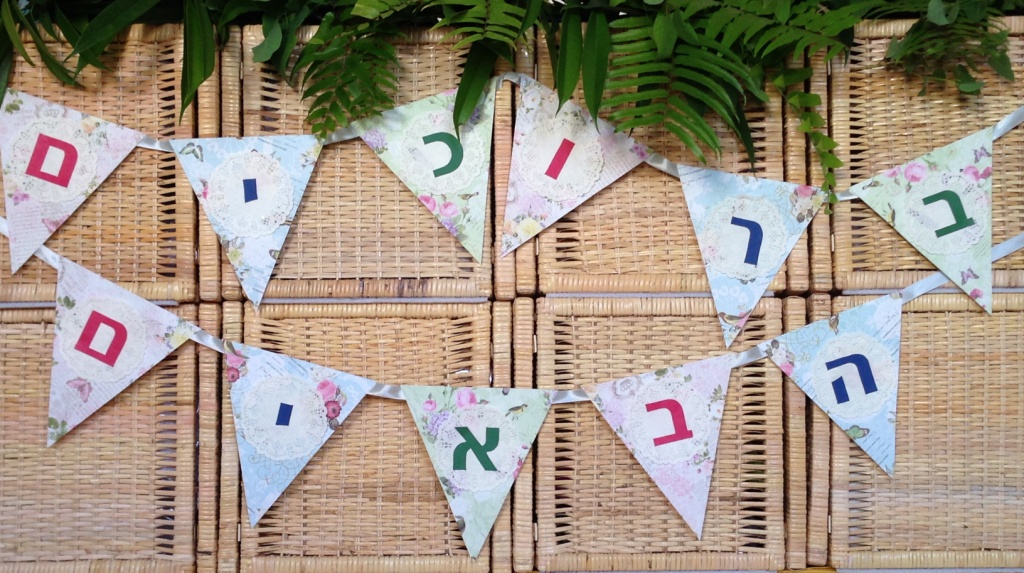
Welcome Home Bilhah & Zilpah!

Our learning was dedicated to:

  • Johanna Bromberg who attended this event last year; comments shared during Johanna’s funeral showed how much she supported Jewish learning
  • Ruth Meeron, an elder in our community
  • I usually think of my dad when I study Torah, because it was so important to him

Sigd, a day of return

Hirut Yosef

Friday evening is erev Sigd; 29 Cheshvan 5785 in the Jewish calendar begining on November 29 in the 2024 Gregorian calendar. This holiday, preserved in the Beta Israel (Ethiopian Jewish) tradition, became a national Israeli holiday in 2008. Despite celebrating many Israeli holidays in the United States of America, Sigd was not among them. I learned of Sigd as my insistence on bringing my full self into my Judaism grew beyond the confines of Ashkenormative settings with too many moments conveying that I am not enough. Sigd was one small way to hold my Jewishness with threads towards other cultural identities, including an African-ness historically severed from everyday familial consciousness, like many affected by the transatlantic slave trade.

So, when Jews of Color Sanctuary launched in 2019, it happened during a small community event celebrating Sigd. The following year I was living in Israel and excited to celebrate Sigd again. The large gathering typically planned for the Tayelet promenade overlooking Jerusalem was affected by the coronavirus pandemic. It was challenging to find revised events as a visitor who is not a member of the Beta Israel community. I thought all of Israel would be celebrating, but found no outward signs. If you didn’t know it was Sigd, you wouldn’t know it was a holiday. Asking folks at my yeshiva revealed a belief that the holiday was cancelled. I was shocked because we had just gone through the high holy days which were changed, but not cancelled. I had even heard many stories of events like weddings, b-mitzvot, brit milot still happening. Why was it easy to believe that Sigd would just be skipped?

I thought of how some are happy to have a Martin Luther King Day off of work but don’t hold any part of the day in observance. Sigd appeared to be a national holiday in name with more to the story. Researching for the Jews of Color Sanctuary launch revealed a desire of Beta Israelim for all Jews to celebrate Sigd. I sensed a pride in having preserved this history for Judaism. That invitation made me feel brave in my previous observance. Now, far away from home, when I thought I would attend events out of many scheduled throughout Israel, I couldn’t find one. I was heartbroken and angry.

I took the day off of school and dedicated myself to figuring out something! Before traveling to Israel, I had found a North American Beta Israel organization. Through those attempts to connect with Jewish people of color in Israel before I arrived, I met a person who invited me into celebration and later became a friend. As with many things in life, despite the tragedy in the moment, I am grateful for gifts acquired through the journey.

I think of Sigd as a holiday of return. During Rosh Hashanah this year, I thought a lot about where I am returning to? More and more, my sense of return is less about a physical journey than an internal one, something I may spend a lifetime figuring out. In thinking about all of the things that had to come together to make me into the person I am today and bring me to the moment and place where I am at this very moment, gives me a lot of gratitude about the interrelationship between things. Without the events that caused my parents to meet, I would not be here. My reaching for Sigd as a way to hold my full self within Judaism happened along a trajectory that continues to reveal itself… or maybe, is my path of return. I am grateful that I have company along the way as I continue to figure it out.

I invite you to join me. One exciting opportunity is the Bilhah Zilpah Homecoming this Sunday December 1. We will prepare to welcome Bilhah and Zilpah for their return to the Torah during parashat Vayeitzei (and a little celebration of Sigd / JoC Sanctuary anniversary). Bilhah and Zilpah offer a rich lens to explore biblical experiences that remain a reality today, such as surviving marginalization, being in sisterhood, and striving towards abolition.

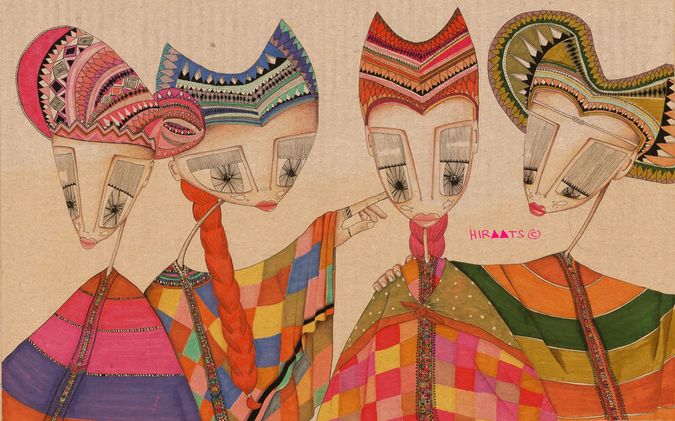
Wishing you a meaningful Sigd with engaged learning about the holiday and the Beta Israel. The image opening this post is by Hirut Yosef who emigrated from Ethiopia to Israel and has also lived in Turkey, the USA, and elsewhere. Hirut uses her art to explore the relationship between Ethiopia, Israel, and other places she has lived, as well as return in a variety of ways. May your return take you where you need to be.

Shabbat Shalom v’Chag Sigd Sameakh

BILHAH AND ZILPAH RETURN

Welcome Bilhah and Zilpah as they enter the Torah in Parashat Vayeitzei. Each year we re-read the Torah, as the people we have become since last year. There is always more to discover and Bilhah and Zilpah have more to teach us too. This year’s homecoming activities will include study of Torah and midrash around these characters, deeper dives into ritual creation, and creative ways to bridge matriarchal ancient wisdom with modern living.

One example of connecting Torah to today is during the United Nations Sixteen Days of Activism Against Gender-Based Violence from November 25 through December 10. This is an opportunity to link biblical stories to current issues connecting global communities. How might Bilhah and Zilpah see the gender-based violence of today where you live? How might they support their great+grand-daughters in surviving, healing, and thriving?

Bilhah’s and Zilpah’s entry happens a full and partial week after Sigd which is November 29. We’ll save a little celebration for this Beit Israel (Ethiopian Jewish) national holiday of return, which also marks the anniversary of Jews of Color Sanctuary!

Register for the Bilhah Zilpah Homecoming series on Sundays in December between 12-2pmET.

  • December 1: Bilhah Zilpah Enter & Sigd/JoC Sanctuary Anniversary
  • December 8: Witnessing Biblical Matriarchs
  • December 22: Witnessing Modern Matriarchs
  • December 29: Leaving Matriarchal Legacies

Homecoming events are open to all. Email danserica@gmail.com with questions.

Read more about the origins of these events in The Bilhah Zilpah Project: Twenty-Four Lines of Torah published through Evolve: Groundbreaking Jewish Conversations.

Elul preparations for a new year

I served as staff at Kirva’s recent Spiritual Immersive and was invited to share a short practice during the lead-up to Rosh Hashanah. Kirva’s social justice approach to mussar, an ancient Jewish ethical practice, is a valued collaborative partner with Jews of Color Sanctuary. The five days we spent together at Pearlstone strengthened our practice, reinforced bonds, and built community as we used mussar to align our actions with our values. Learn how to bring Dismantling Racism from the Inside Out into your community. Meanwhile, I hope this practice enriches your preparations for the High Holy Days.

L’Shana tovah

Teshuva Across Waters

Teshuvah Across the Waters (TAW) is an exciting opportunity to bridge African diasporic Jews/Hebrews with African Jewish/Hebrew communities.

As a Jewish person of unknown African and Indian heritage, I have deep yearnings to experience ancestral Jewish traditions that have been severed through colonization, enslavement, and assimilation. Supporting the connections that will be forged through this project will enhance global Jewry’s collective efforts of Teshuvah, aligning values and relationships with ourselves, God, and the world.

TAW seeks to strengthen bonds across the Jewish Diaspora by lifting up the traditions and histories of African Jewry within the global Jewish community needed for an holistic and thriving Jewish peoplehood on our path toward spiritual redemption. Please join the incredible support for this project to increase connection our collective Jewish ancestry. A financial contribution of any amount can help us bridge these waters.

Jewish End-of-Life Practices & Rituals

Jews of Color Sanctuary is honored to have conducted research on Jewish end-of-life practices and rituals among Jewish people of color released in March 2024. The report, contracted by Kavod v’Nichum with the support of the Jews of Color Initiative (JOCI), is an invitation to center the voices and experiences of Jewish people of color in ways that honor connection to and strengthen a Judaism reflecting the richness of Jewish diasporic traditions.

Download the report and read more in JOCI’s Galim newsletter.

Dreaming the world to come

I am proud to have served as the editor for the 5785 Dreaming the World to Come. The planner will begin shipping around Tu b’Av (August 19). I am delighted to offer a friend’s of the editor 18% off discount code TUBAV5785 that is good between August 18 through September 1.

FUN FACT: All three of the editor staff are born in the month of September!

The planner will be a beautiful place to keep your appointments on track during both the Gregorian and Jewish lunar calendar and nourish your spirit with ritual offering from 12 AMAZING contributors! One of the reasons I said yes to shepherding this project was the commitment to feature Jewish people of color, among many other identities, whose creative voices comprise 8 of the 12 contributors.

If you are new to this project, here is a description:

Dreaming the World to Come planner weaves ritual offerings from diverse fonts of wisdom through our Jewish year. It is our attempt to create something beautiful and defiant that shows we are here, fighting to keep Jewishness anchored in resistance, justice, and mystical tradition.

The planner cover invokes the Jewish sea monster Leviathan, who offers medicine needed in these times. Moving through darkness, unperceived; the fugitivity practiced by those whose existence has been criminalized and controlled. The Leviathan is a friend, lover, and protector of those escaping enslavement and incarceration, those whose perspectives are intentionally buried, whose inherent rights have been denied, who are forced underground for survival.

Beneath the face of the waters, in the depths,

the monster Leviathan lies coiled.

She moves in the darkness;

we cannot see her, yet we feel her power.

JoC Journey Toward Healing

guest blog by Tamar Ghidalia & Jill Housen, 3W Consulting

3W Consulting‘s work is anti racist and anti-oppression work and uses liberatory practice at its core. Since the work is significantly grounded in Jewish life, tradition, texts and values, it enriches the spiritual life of the participants and allows them to claim their Jewish identities.

We have served 20 organizations over the last 3 years: congregations, communal organizations, schools,camps, and presented at national conferences. We intentionally support and center JoC’ leadership.

We created JoC Journey Toward Healing because of the need of JoC to have places to just be and share their identities in a safe space. We believe that JoC are deserving of care and joy, feeling seen, heard and understood, feeling empowered and not alone…

By tapping into the wisdom of Jewish tradition and texts, we can find ways of healing from the traumas that we have faced and be able to bring forth all of our identities. Together we can build our sacred space through prayer, poetry, music, storytelling, meditation, comparing the BIPOC and Jewish oppression and liberation narratives, and sharing our dreams of liberation.

Please register to join us.

Best,

Tamar & Jill

Keshet Neshamot

Keshet Neshamot Shabbaton 2024 attendees (photo: Brittany Maxson)

Keshet hosted Keshet Neshamot / Rainbow Souls Shabbaton: a Retreat of Radiant Belonging February 16 through 18, 2024 at Pearlstone Retreat Center in Reistertown Maryland. Attendance was aspirationally capped at 30 participants in the planning stages. Ultimately, 90 people completed the form to attend. We came from across the country for a taste of community. This was the first Shabbaton for some, a reunion for others, and a beautiful opportunity for all to bring our full selves into Jewish space.

If you have not heard Keshet, a national group working for LGBTQ equality in Jewish life, has a new Jews of Color Programs Manager in Sage Cassell-Rosenberg who collaborated with other keshet neshamot to create the best Shabbaton I have EVER attended!

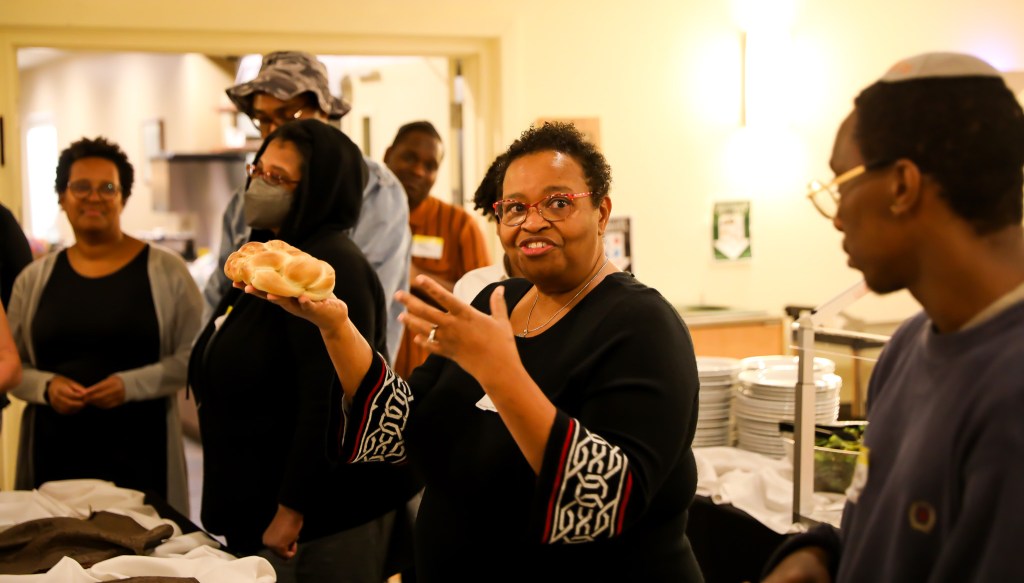
HaMotzi led by Harriette Wimms over our challot (photo: Brittany Maxson)

It began with baking challah, a precious way to ground us in ritual and meaning while literally making Shabbat together with collective hands. This opening was shephered by Harriette Wimms, founder of the Jews of the Jews of Color Mishpacha Project (which has been hosting an annual Shabbaton since 2020, the next one coming up July 12-14, 2024) and Kohenet serving on the board of Beit Kohenet.

Kabbalat Shabbat was led by Joshua Maxey, Executive Director of Bet Mishpacha of Washington DC using their amazing siddur from this egalitarian queer community founded in 1975. We used the Shabbat and Havdalah Guide for BIMPoC & BIMPoC LGBTQIA+ Jews on Shabbat morning, led by the guide’s creator, Kadijah Spence. Version 2 of the Shabbat and Havdalah Guide has been updated to include transliteration for Hebrew and the Hebrew alphabet.

Shabbat Guide created by Kadijah Spence & Shavat va-Yinafash siddur of Bet Mishpacha (photo: Brittany Maxson)

Shabbat afternoon was filled with more activities of connection and belonging. Is Perlman, Keshet Youth Intern, led a powerful, rich, and inclusive Identity Mapping session to embrace the richness of our diverse intersectional identities. Enzi Tanner staff of Bend the Arc and somatic fellow with Mitsui Collective led a session focused on caring for ourselves and our communities, bridging Jewish text, wisdom, and tradition with modern physical and psychological well-being practices. Sage invited us into one-on-one engaged sichot (conversation) sessions with guided prompts.

Later, Sage wove in Jewish teachings as our hands made our own Havdalah candles which ignited our closing of Shabbat. Story District highlighted the importance of our stories through a group activity before featuring Stories For Liberation told by five of the Shabbaton participants: Sage Cassell-Rosenberg, Samiah Fulcher, Is Perlman, Kadijah Spence, and Harriette Wimms. We celebrated new and deepened connections late into the night. Our departing Sunday morning closing session, titled Shrugging Off Imposter Syndrome and Owning Your Badassery by Kiyomi Kowalski, was sadly cancelled due to illness. There are plans to reschedule this session virtually which can expand the Shabbaton community.

Storytellers: Harriette Wimms, Sage Cassell-Rosenberg, Kadijah Spence, Samiach Fulcher, Is Perlman with Scott Hollingsworth of Story District (photo: Brittany Maxson)
Havdalah over handmade braided candles (photo: Brittany Maxson)

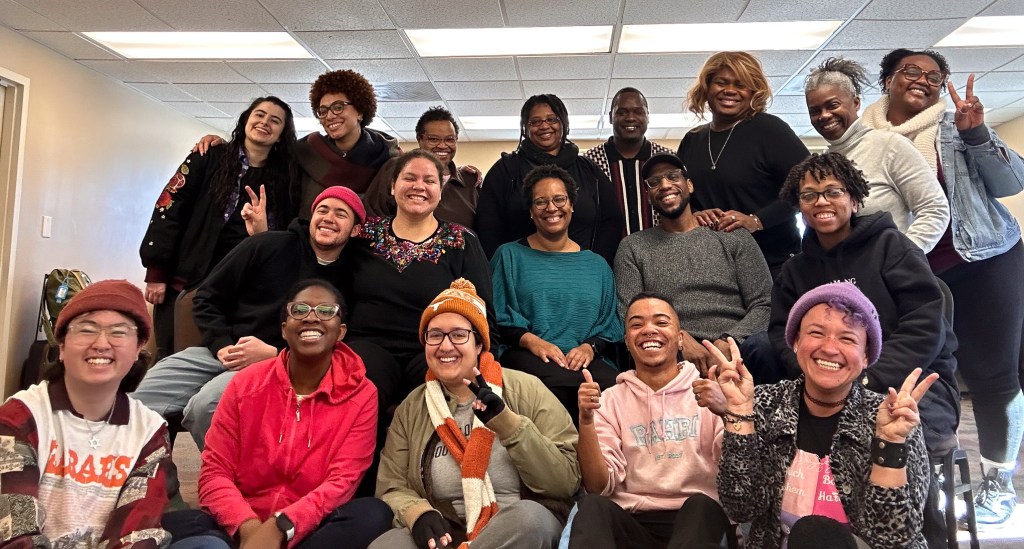
As we closed a sweet Shabbat of belonging, Brittany Maxson (participant and photographer) took the beautiful photograph that opens this article. Gathered together for the last time, Keshet announced the first ever research study to better understand queer Jewish people of color experiences within Jewish spaces. This will build on the groundbreaking 2021 Beyond the Count: Perspectives and Lived Experiences of Jews of Color study, the first of its kind by the Jews of Color Initiative who surveyed 1,118 respondents across the country. Itself, building on the 2019 Counting Inconsistencies: An Analysis of American Jewish Population Studies With a Focus on Jews of Color which estimates between 12-15% of our Jewish community identify as people of color, about twice as much as the 6-8% once thought by the Jewish community.

Jews of Color Sanctuary is proud to be a connected partner in the national Jewish people of color landscape, bringing a taste of the community we can have here in Cincinnati and the Midwest. We are just finishing the Dismantling Racism from the Inside Out, Midwest JoC affinity mussar va’ad, in collaboration with Kol Or of the Council on Jewish Affairs in Chicago and Edot in Milwaukee, with support from Jews of Color Cleveland. Jews of Color Sanctuary is considering launching an open in-person Cincinnati cohort or a virtual Ohio cohort and we’d love to talk with you about it. There is so much possibility and we get to chart our present into the future!

Let Justice Well Up

Affinity space supports deepening what we do in such spaces through the nature of being among peers in ways that can foster connection, insight, and healing. Affinity space has a long history across cultural traditions, including Judaism. Affinity by gender, age, trade, skill level are so common, we may no longer see them as such. Our time in affinity enhances when we are together.

Learning is a foundational activity that has experienced perhaps every kind of affinity filter that can be imagined. My inquisitive nature fuels a love for learning, and my love for learning embraces my curiosity. I pour all of this love into the sessions I facilitate, seeing these moments as opportunities to celebrate the learn/teach balance in each person, idea, and question. The chance to learn in female and nonbinary people of color space is among the rarest of learning affinity space I get to inhabit, either as learner or teacher.

This is why I am delighted to once again be leading text study for Jewish women and non-binary folks of color for the Mayyim Hayyim Let Justice Well Up text study series supported by the Miriam Fund. Six sessions will be offered on second Wednesdays, starting February 14, through June with a special closing siyum on July 3. We will bring in the wisdom of water, ritual, and more as we explore justice through the power of our perspective as Jewish women and non-binary folks of color. Our cultural communities have rich foundations of female and tum tum ancestral wisdom that has birthed and nurtured our communities. That is the legacy we are rippling into.

Register for one session or all six, but don’t miss this opportunity to learn together in this rare affinity space that I believe will feed our souls in ways that truly enrich the other spaces we inhabit. All you need is yourself, some creative practice materials at hand, and an openness to allow the text to tap into your innate wisdom that already connects you with Torah through your lived experiences. Get ready to fall in love with text study, and please share this with the women and non-binary folks of color you are in solidarity with. Collectively, we will make this space what we need it to be. I’m excited to learn together again!