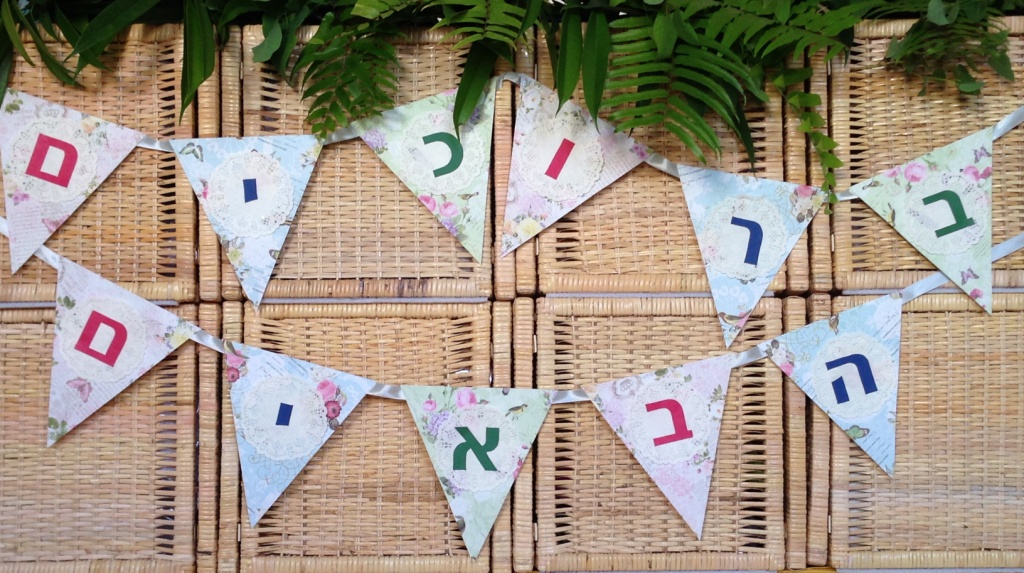
The Bilhah Zilpah Project, which started in 2020 as an independent study project, has become our biggest event of the year since finding a project home at Jews of Color Sanctuary. Homecoming is a series of events open to the entire Jewish community which usually begins on the Sunday before the Shabbat of parashat Vayeitzei, when Zilpah and Bilhah entre the Torah, coinciding during the week Sigd is celebrated as a national Israeli holiday preserved in the history of the Beta Israel people… and is the anniversary of Jews of Color Sanctuary.
After three years of weekly chevruta study, and at numerous events with folks like you, focusing on the lines of Torat Bilhah Zilpah and character exploration, the past year’s study expanded to include relevant midrash and commentary of these matriarchs. This has introduced exciting insight into ancestral connections, divine power, and generational wisdom for survival which will be interspersed throughout and featured at the closing session of this year’s Bilhah Zilpah Homecoming.
However, first, we will welcome Zilpah’s and Bilhah’s return to the Torah through the twenty-four lines that invoke them and explore the ritual dreaming that has percolated up through the spirited engagement of collaborative sessions. Homecoming’s second session will link the wisdom of Bilhah & Zilpah to women throughout history who have navigated kindred silences and lack of bodily autonomy to inspire our community building and care work today.
Today is Sigd, and the Bilhah Zilpah Homecoming begins this Sunday… amidst all of the change happening, these are frameworks that center longing for and returning home, and giving voice to the voiceless… Torah we desperately need right now, and always. There is still time to register. Invite those you are working alongside building up the world to come, to join us as we welcome these matriarchs at three interactive online sessions of ritual dreaming and deepening relationship with the wisdom of Bilhah and Zilpah:
BILHAH & ZILPAH ENTER – 12-1:30pmET November 23: A Homecoming Celebration to welcome Bilhah & Zilpah as they enter the Torah in parashat Vayeitzei. This interactive session will deepen your relationship with the wisdom of these matriarchs, continue ritual dreaming, and mark the anniversary of Jews of Color Sanctuary.
MODERN MATRIARCHS – 3-4:30pmET December 7: Link the wisdom of Bilhah & Zilpah to women throughout history who have navigated kindred silences and lack of bodily autonomy. Explore how their voices can help us understand our modern lives, find community, survive marginalization, and realize abolition.
BILHAH & ZILPAH: ANCESTRAL STORIES – 3-4:30pmET December 21: Catch up on a year’s worth of learning focused on Bilhah & Zilpah through midrashic tales of ancestral connections, divine power, and generational wisdom for survival.
The celebration of Sigd is powerfully conveyed in the words of Beit Israel scholar Shula Mola in The Sound of Səgd (ስግድ): Reclaiming Language, Memory, and Belonging which invites us into a journey of the power of naming in sacred conversation with a foundational theme of the Bilhah Zilpah Project. May your Sigd be filled with meaning and joy.
The night sky has always been miraculous. Even before humanity came to understand the impact of the moon on earth’s seas, it is easy to understand how calendars began marking lunar time. While the location of the sun came to reveal the time of day, and the trajectory height of the sun’s path associated with the seasons, the moon’s changes in visibility governed cycles into months.
Thinking of the moon commonly conjures images of white fullness against a sea of black, a sphere of peace amid the תֹ֙הוּ֙ וָבֹ֔הוּ וְחֹ֖שֶׁךְ tohu v’vohu chaos and void (Genesis 1:2) of seeming endless blackness. Yet the Jewish holiday of Rosh Chodesh celebrates the arrival of a new Hebrew month with the birth of every new moon. Setting the month in the darkness of the new moon may follow the wisdom seeded within the Torah’s story of creation spanning from evening to evening, וַֽיְהִי־עֶ֥רֶב וַֽיְהִי־בֹ֖קֶר vayahi erev vayahi boker there was setting there was dawning (Genesis 1:5).
God calls for light and it appears. God proclaims the light good, makes distinct within the dark, naming light day and dark night. This binary separation and naming originating through the first day of creation (Genesis 1:4-5) repeats in the separation of the water of the heavens from the water of the seas (Genesis 1:6-8), sea from the first place of dry land (Genesis 1:9-10), and adding lanterns to further mark night and day (Genesis 1:14-18). Genesis 1:16 opens with God creating two great luminaries before immediately suggesting the larger light rule the day and the smaller rule the night.
As the story of creation continues, God brings forth grass, seeds, fruit trees, sun, moon, stars, water creepers, flying birds, sea monsters, herd animals, land animals, and humans (Genesis 1:2-27). Each introduction affected what was surrounding it.
All water on earth is connect to the seas. All water is affected by the gravitational pull of the moon. Yet, noticeable effects are increased or diminished by volume.
In Chullin 60b:2-4, Rabbi Shimon ben Pazi notes the contradiction between equality and what appears to be an immediate shift. Pazi shares midrash outlining an exchange between moon and God. It’s easy to wonder about the moon’s motives in questioning, and blame the lessening as a repercussion of confronting God. Making an analogy to the doctrine of separate but equal can offer another perspective of the moon as a body of light willing to speak up and call out separation presented as equal that is not.
There is more to be curious about in these lines––referencing kings (masculine plural) and speaking ‘to her’ in an equality framework, God’s ability to call forth creation and separation through words yet directing moon to diminish itself, humans bringing sacrifice to atone for a transgression of God, the stars being luminarily ignored, and linguistic associations with great-lesser and light-dark, for example. Amidst the questions, a beautiful aspect of this midrash is that God listens to moon, and continues to try to make reparations. In the culminating attempt, God notices moon is not comforted. God acknowledges the harm, attempts to make amends, and pays attention to the result.
This story could be minimized as cleaning up one’s mistake. This moment can also be read as allyship. Intentional, careless, and unconscious harm are distinct states. Making mistakes is inevitable and can happen through carelessness or unconsciously. How we respond is what matters most. We are theanthropic bodies affected by and affecting the world around us. This midrash invites us to pay attention when questions are raised, consider actions, and pay attention that an intention of solution lands as such. There’s also an unspoken message of mutual responsibility. Moon braves speaking up and God braves making repair. Along the way, both brave listening to the other.
We gathered in a bittersweet and joyful closing homecoming session to hold and honor Bilhah and Zilpah. Over our month together, we shared the story of Bilhah and Zilpah; a narrative of being born into a system of enslavement, navigating life’s realities, finding identity in a sea of change, and creating better opportunities for our children.
In our first session, we read the lines of Vayeitzei that introduce Zilpah and Bilhah, foreshadow their marriage to Yaakov as they’re given to Leah and Rachel, and reveal how they are used to create children intended to be claimed by other women. We journaled about how/why Bilhah and Zilpah are meaningful in our lives and considered the meaning and actions of homecoming. We closed with a collectively created welcome home prayer:
Our second session looked at the other women of Bilhah’s and Zilpah’s story in parashat Vayishlakh and considered their relationships. The possibility for understanding and care born from kindred experiences. We noted Dinah’s experience with rape and her marriage being determined by her brothers and her rapist. We noted the women of Shekhem’s experience of witnessing their men be executed followed by their enslavement along with their children. We noted the mention of another woman (Devora) who had given her life to serve the family featured in the narrative. We started to excavate ritual imagery.
During our third session we continued looking for women in the story. Parashat Vayeshev, when we did not meet, mentions Tamar’s experiences surviving a husband’s death and control over her ability to procreate by her father-in-law, Yaakov’s unnamed daughters, and Timna as the mother of someone named an enemy. Parashat Miketz added only one woman, Asenat who was given to marry Yosef. We considered archetypes as a framework to understand the messages embedded within the story and connected the experiences, wisdom, and legacies of modern matriarchs to biblical matriarchs.
Today’s gathering opened with Esther Rabbah 1:12, a source that acknowledges six matriarchs instead of four. We are dropped into a discussion about a royal throne which turns to a query of how many steps led up to it. Like all rabbinic debates there was contestation and clarification. Are there seven instead of six? This is a classic case of tread versus riser. An additional riser goes up to a floor level, which is not a step, culminating in one additional riser than tread, the standing surface of a step, in any stair. The bulk of the source lands on six stairs (treads) and then likens it to a list of groupings of six: lands, orders of Mishnah, days of creation, matriarchs, and mitzvot.
Then, we invoked the Amidah line of the matriarchs, itself an augmentation to the prayer service in the history of prayer evolution. We played on the personal meditation invitation of the Amidah to reflect on the Esther Rabbah source and how it felt to step into prayer development space. We reflected on how ritual relates to legacy.
Throughout the readings, Bilhah and Zilpah remain in the story, always attributed as the birth parents of their children. That continues in parahsat Vayigash which holds the first accounting of the descendants of Zilpah and Bilhah. As we have welcomed Bilhah and Zilpah into the space, we have brought along ancestors and personal and biblical figures who have been meaningful in our life. Attendees shared recent yartzeits, honoring the memory of a loved one who had died, recently observed or coming up. Father’s, mother’s, a brother, a grandfather, a sister-in-law, an aunt, and a grandma named Hannah, who died during Chanuka, whose yartzeit starts this evening soon filled the room with us. Some had experienced a lot of loss this year. Everyone named someone. This set the stage for reading Zilpah’s and Bilhah’s lineages, first in Vayigash, culminating in Numbers.
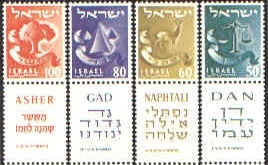
We lit a yizkor candle and read the accounting of the families growth as they traveled to Canaan and later to Egypt. We focused on Zilpah and Bilhah, and then Gad, Dan, Asher, and Naphtali. We looked at options that can be found in traditional yizkor memorializations as we considered borrowing from this ritual as a way to honor Bilhah and Zilpah. As Chag haBanot and Rosh Chodesh approach, celebrating Serakh, Zilpah’s granddaughter and an immortal Talmudic elder, emerged as a calendar time to anchor possible communal commemoration. We returned to previous ritual elements explored in session two as ways to anchor memory to source material. Yartzeit and yizkor both are times when donations are often made in the name of a person being remembered. This idea wove into supporting organizations who support women who have been silenced after sexualized violence, bridging biblical matriarchs into the continuing realities of our world today.
We closed with storytime of Serakh midrashic tales of singing secrets, clarifying the texture of the Sea of Reeds, revealing where Yosef was buried, and vouching for Moshe from her first-hand knowledge, as the elder of elders who left Egypt and returned. This rolled into a midrash of ברזל barzel (iron) being an acronym for Bilhah-Rachel-Zilpah-Leah, Yaakov’s four wives representing the sefira malchut. We parted to a recording of Lucille Clifton reciting “won’t you celebrate with me”.
This is the final weekly email that runs during the annual Bilhah Zilpah Homecoming. Stay connected with the Bilhah Zilpah Project throughout the rest of the year with monthly emails sharing insights from weekly study. You can sign up for email through the homecoming registration form or reply to this email.
Joyful wishes for a continuing Chanukah and Kwanzaa and a meaningful Chag haBanot and Rosh Chodesh Tevet. May our actions bring us closer to the world to come.
We gathered for our penultimate session of the Bilhah and Zilpah homecoming. Today we grounded our welcome by naming historical or biblical figures who have been meaningful in our lives, sharing a bit on the lessons we have learned from them. Audre Lorde (1934-1992), Shifra & Puah (Exodus 1:17-19), Judith (Judith 13:10-12), Colin Ward (1924-2010), and Eartha White (1876-1974) were named. We also continued our tradition of inviting in the memories of ancestors fueling our learning: the persistence and resilience of a maternal grandfather to overcome fear; and Mi’kMaq great and great grandmothers, who were very fierce tenacious women, connected with during an ancestorial homeland visit to Newfoundland (Ktaqmkuk), Canada were brought in to support and enhance our learning…
Our recap of the first three parshiot of Bilhah’s and Zilpah’s homecoming, Vayeitzei, Vayishlakh, and Vayeshev, was offered before bringing in the stories of the upcoming parasha Miketz. On the surface, these portions tell the story of Yaakov leaving home, to save his life from the wrath of his brother Esav and seek a wife, ultimately acquiring four wives which is how we meet Zilpah and Bilhah. It is the tale of sending gifts to appease a brother heading his way accompanied by four-hundred men that sweetly resolves in a joyful reunion and an invitation for Yaakov to join Esav in Seir that is refused in lieu of Shekhem and the rape of Dinah. It is a story of settling down in a father’s homeland, raising a family, and mourning the ‘death’ of a favorite son; with a full chapter interlude of the righteous insistence of Tamar to have children, before returning back to Egypt where a very much alive Yosef has been sent to the dungeon for refusing the sexual advances of a wife with a powerful husband. The narrative will continue this coming Shabbat with Yosef freed by his ability to interpret dreams for a confounded Pharoah and the suggestions made that protect (and enrich) Egypt from the same famine that ultimately reunites Yosef with his family.
All that might be added to expound the single run-on sentence parshiot summaries would be details nuancing the broad brush strokes painted above. The call to center Bilhah and Zilpah invited closer consideration of ways to bring them in, especially in a portion which does not invoke either character. This offered opportunity to build on previous study and interpretations for reading solidarity between Bilhah and Zilpah with Leah and Dinah. This insight with Leah comes during Lavan’s search for his idols in the mountains of Gilad (Breishit 31:33) with it’s odd ordering of entering Leah’s tent, entering the shared tent of the two enslaved, and then exiting Leah’s tent before entering Rachel’s tent. Could Leah’s sense of herself as a second-class first-wife induce empathy with the second-wife realities of Zilpah and Bilhah? The invitation to envision solidarity with Dinah lies in Bilhah and Zilpah, as women who navigated orchestrated sexual control by others, witnessing the consequences endured by Dinah after her rape by Shekhem followed by her brothers deciding the fate of so many.
Beyond these primary female characters of Leah and Dinah, we looked at other women, some named and others merely noted, who existed within Vayeitzei, Vayishlakh, and Vayeshev. Miketz offered another chance to explore other women within the text, there was only one, Asnat who was given as a wife to Yosef. So, Bilhah and Zilphah entreated looking at the transitions between the narratives of women across the parshiot where they dwell, whispering to go back and include Toldot as a foundation. It is easy to miss this sequencing of matriarchal stories operating the background because of the focus on completing the full set of twelve sons that become the Israelites and in setting up the Jewish foundational narrative of being betrayed and enslaved by Pharoah. We had quite the spirited conversation of the archetypal messages subconsciously conveyed about women’s purpose and place, and the conditions under which autonomy of action by women is interpreted as righteous or wrong.
Our conversation introduced Modern Matriarchs which considers the stories of historical women alongside Bilhah and Zilpah. Modern Matriarchs grew out of understanding Bilhah and Zilpah as surviving lack of bodily autonomy amid their voices being silenced, a reality of many women today, if not all women to varying degrees. Bilhah and Zilpah have a lot to teach about navigating oppressive conditions. Connecting biblical wisdom with the secular insight of other women who survived kindred realities emerged as a powerful framework. The list started with Lucy, Anarcha, and Betsey (the women who made modern gynecology possible between 1845-1849); Nancy, Mary, and Lizzie (two enslaved sisters and a third enslaved woman married to the same man in 1855); Emma, Carrie, and Vivian Buck (three generations of women sacrificed to legislate control over women’s womb’s which came to a head in 1927); and Henrietta Lacks (whose cells made modern drug testing and development possible in the 1950s); women largely controlled in medical settings.
We met modern matriarch Recy Taylor (1919-2017) whose yartzeit is December 28. Recy was a twenty-four year old mother of one when she was abducted at gunpoint by seven men & raped by six in 1944, while walking home from church with another woman and the woman’s son. A car had passed several times that evening as the trio navigated along peanut plantations lining the highway in Abbeville, Alabama. Recy was forced inside the car by men armed with knives and guns, claiming they had been deputized to bring in an assailant who cut a white boy. Recy knew the men who raped her, and was warned to be silent, but she told what happened to her. There was no redemption for her from those men despite going through two trials and enduring intimidation. Recy’s voice might set her apart from Bilhah & Zilpah but little reveals whether or not Bilhah and Zilpah used their voice to affect their reality, beyond potential creative solidarity reads presented above. Recy’s story endures in part because of her brave resolve which ignited national organizing around the conditions of sexualized violence black women faced daily, that in turn provided the foundation for a civil rights movement to fight for the right to sit on a bus which was ultimately easier to win than protection of female bodies. This is part of Recy’s legacy, born from the brutality she endured that left her unable to have more children. The only formal redemption received was an apology by the Mayor of Abbeville in 2011 after the release of At the Dark End of the Street: Black Women, Rape, and Resistance–A New History of the Civil Rights Movement From Rosa Parks to the Rise of Black Power by Danielle McGuire. This highlights how voices can be erased even when raised. That history already shared through the words and actions of black activists appears unheard until written as a book by an author whose About page never names herself as white (or anything else) for a book that notes ‘Black’ twice in its title.
We brought Bilhah and Zilpah back into the conversation through the following journal prompts:
• How do Bilhah’s and Zilpah’s biblical realities relate to historic ones around the globe and ours today?
• How might Bilhah and Zilpah have channeled what they endured into actions that paved the way to better realities for their daughters?
• How do we interact with figures like Recy Taylor and understand them beyond one moment that came to define them? How do we do the same for Bilhah and Zilpah?
We returned to ritual explorations begun at our last session, now considering existing ritual moments connecting to characters discussed or the time of year:
God of Sarah, God of Rebecca, God of Rachel, and God of Leah
Chag haBanot or Rosh Chodesh l’Banot or Eid-al-Banat, a North African Chanukah festival of daughters celebrated by some Jewish communities in the Middle East on Rosh Chodesh Tevet during the Jewish holiday of Chanukah. The holiday was most preserved by Tunisian Jews and also celebrated by Jewish communities in Libya, Algeria, Kushta, Morocco and Thessaloniki.
Rosh Chodesh
Chevruta pairings yielded rich conversations that referenced Kindred by Octavia Butler, compared midrash as Jewish fan fiction, asked what it means to build a shared tent (during Sukkot and beyond), considered saving a bus seat for Elijah as an empetus for action during Pesakh, envisioned ways of weaving Bilhah and Zilpah into the Kabbalistic approach to counting the Omer using sefirot (attributes of God), considered the ethical issues of modern gestational characters where birth mothers are often excised from children’s lives distinct from biblical characters where mothers often remain in the picture, and pondered erecting altars to flawed individuals rather than requiring an image of perfection that requires erasure to warrant admiration.
After more group discussion, we brought in the ritual elements identified at the previous session, and split into small groups to look for objects, actions, prayers, and lines of Torah that might inspire ritual or be borrowed into it. We considered bat mitzvah, commonplace today yet didn’t exist until 1970, which may feel far away but is far from ancient. Bat Mitzvah has become so commonplace within the past fifty-five years that we are currently witnessing the continuing morphing of this ritual as it transforms from bar and bat into ‘b’ which stands for both and welcomes people for whom those categories are nuanced. The example demonstrates how Judaism needs us to create the rituals we need for our lives, which in turn keeps Judaism alive.
We considered:
What ritual opportunities are inspired by the lines that invoke Bilhah and Zilpah?
What modern historical characters have kindred experiences with Bilhah and Zilpah?
How might you imagine celebrating daughters through Bilhah and Zilpah?
How might honoring Bilhah and Zilpah open opportunities to acknowledge other biblical women?
Our engaged study took us right to the end of our time together. We were slow to part but looking forward to our last Bilhah and Zilpah Homecoming session on December 29 when we will explore Weaving Matriarchal Legacies, looking to the generations and story threads that tie us together. Register to join us. We would love to study with you! Until then, listen for Bilhah and Zilpah whispering to us.
We gathered again to continue honoring Bilhah and Zilpah, grounding our homecoming welcome by inviting in the memories of ancestors fueling our learning: Joan Little who was tried and convicted instead of her rapist, the memory of a dad who retired to become a stay-at-home parent, and a maternal grandmother dedicated to community…
Our witness began through reading the lines of hierarchy demonstrated in Breishit (Genesis) 33:2. The ordering of wives and children directly relates to who is valued to live and who is positioned to be sacrificed to death, reinforcing concepts presented in Caste: The Origins of Our Discontents by Isabel Wilkerson that are still with us.
Yaakov (Jacob) goes to Sukkot rather than join his brother Esav in Seir, despite feigning an intention to do so after a happy reunion instead of the vengeful scene he had feared. Yaakov’s refusal of Esav’s offer to send people from his people to accompany Yaakov and family foreshadows the opening of Dinah’s story within a story inside of parashat Vayishlakh. Dinah’s saga opens with the word וַתֵּצֵ֤א vateizei (she went out), harkening back to Yaakov leaving home… and maybe marriage gone awry…
Sukkot bridges the going out of the family who becomes the Israelite tribes through their twelve sons (completed as this parasha ends) with the going out Exodus of the Israelites leaving Egypt. Yaakov and family traveling to and naming Sukkot on his way to return to a parental homeland, and the Israelites returning to Sukkot, searching for a way home. Teshuva. Returning. To where? Home? New beginnings? Perhaps, returning to figuring out where we are returning to…?
Yaakov’s return leads to Dinah’a rape, which incites revenge killing, deferred from two brothers (Esav and Yaakov) to two sons (Shimon and Levi). Wealth is plundered, more cattle acquired, and women and children enslaved. The family leaves town in the wake of this destruction, on a journey toward more familial destruction in the deaths of Devora and Rachel.
Arrival in Beit El, a place invoked repeatedly, bridges Yaakov’s father’s (Isaac) marriage to his mother (Rivka) encountered at a well with his own marriages starting with meeting Rachel at a well. There is also a connection between Devora, Rachel, and idols all buried under a tree in Beit El, a place simultaneously referenced as going to and leaving from, yet remaining in the same place… perhaps reinforcing a need to figure out where we are returning to… or suggesting an impossibility of returning home…?
We noted the women of the portion that would have been in contact with Bilhah and Zilpah: other enslaved women in Yaakov’s camp, Leah, Rachel, Dinah, the daughters of the land in Shekhem, Devora, and a midwife. We waded through unexplored relationships and allegory for ritual opportunities to remember, name, and honor enslaved matriarchs, sacrificed matriarchs, and concubine matriarchs. We will return to this ritual foundation when we meet again on December 22 and link biblical matriarchs with historic and modern women and issues. Register to join us next time and/or on Sunday December 29 for Weaving Matriarchal Legacies, where we will look to the generations and story threads that tie us together. We would love to study with you!
Until then, keep listening for and hearing Bilhah’s and Zilpah’s voices.
Shavua tov and welcome back into what I now think of as Bilhah Zilpah season. This is the first weekly email of this Bilhah Zilpah Project event which will serve both as some recap of our sweet five-year anniversary celebration and juicy text study.
That said, we each have experienced a year of life that has brought us to the moment and place where we stand today. Figuratively new people, even if not cellularly. This is one of the things I love about studying the Torah. It remains ever-alive, receiving us as we grow and change. Revealing more along our journey through lines that never change.
The bible is split into sections that are read at the same time each year. These biblical sections, called parasha (singular) / parshiot (plural), are named by their first word. Parashat Vayeitzei, which will be read community-wide this coming Shabbat, is named after it’s opening word וַיֵּצֵ֥א (Vayeitzei) He went out…, and is the story of Yaakov leaving home and starting a family.
Toldot, the parasha before Vayeitzei, read this past Shabbat, ends with Yaakov stealing his brother’s (Esav) birthright. Fearing that Esav will kill him, Yaakov is sent from his father’s home in Be’er Sheva to his maternal grandfather’s (Nahor) house in Harran, a city in Padan Aram, with instructions to choose a wife from his maternal uncle’s (Lavan) daughters. A lot of this drama is orchestrated by his mother.
Along the journey Yaakov has a vision of generations as numerous as dust, inheriting land, and becoming a blessing to his people. Arriving at the town well, Yaakov kisses and falls in love with Rachel and works seven years to marry her. Lavan marries Yaakov to Leah instead because she is older and well, Lavan is… let’s say crafty (directing the drama, like his sister). Yaakov is angry but agrees to work another seven years for Rachel.
Breishit (Genesis) 29:22-23 reveal that Lavan hosted a wedding party, where a lot of drinking was enjoyed, before taking Leah in the evening to the bridal tent and Yaakov came in to her. This is the framing of how we meet, first Zilpah, and then Bilhah. Although, it’s unclear if another party was gathered to celebrate the marriage to Rachel, the bride price of labor was exchanged.
Was Zilpah escorted over alongside Leah? Did Bilhah accompany Rachel? Or was this presentation of wedding gifts delivered separately? Was this a ritualized way of giving gifts? How do these lines relate to the custom of fathers walking daughters down wedding aisles or the custom of חֶדֶר יִיחוּד (cheder yichud) room of privacy where a newly married couple spends several minutes alone together.
I have long nurtured the reading that Zilpah and Bilhah being introduced in this way is foreshadowing of their becoming wives. A trace of ceremony in the absence of dowry or consent. Breishit 29:24 and 29:29 tell us that Lavan was giving his own slaves to his daughters. However, by the end of both verses, the second mention of בִתּ֖וֹ שִׁפְחָֽה (veto shifkha) his daughter as a slave / לָ֖הּ לְשִׁפְחָֽה (la l’isha) to heras a slave, could refer to Zilpah and Bilhah or Leah and Rachel. This treatment of women, including his daughters, could be in line with how Lavan is characterized. This is potentially reinforced in Breishit 31:14-15 when Rachel and Leah wonder if their worth has been used up or whether they are still valuable in the eyes of their father, as well as when Lavan catches up to the departing family when he declares ownership of everything in Breishit 31:43.
My years of scholarship has cultivated deep curiosity about the effective difference in status between Bilhah or Zilpah and Rachel or Leah. Given shifts in their role/status and owner, the nature of Bilhah’s and Zilpah’s enslavement is also a question. What was the nature of their service to Lavan? This is compounded through the usage of וַיִּתֵּ֤ן (vayitain) gave, a word I understand as gift, conflated in a transactional framework.
Vayeitzei, the parasha when Bilhah and Zilpah return to the narrative each year, is the where the central lines that evoke them consecutively reside: Breishit 30:3-30:13. While wealth is named elsewhere as cattle, slaves, and silver or gold, these lines highlight the currency of children. A commodity that left Leah feeling unvalued despite providing six valued sons and a lone named daughter. The lack of which made Rachel feel unfulfilled despite having Yaakov’s heart. Amidst the war raging between Rachel and Leah, Bilhah and Zilpah find ways to navigate their shifting status between slave, wife, and concubine AND maintain relationships with their children who are always attributed to them.
We are more than our circumstances. Bilhah and Zilpah were more than enslaved people, used as a sexual trade to be stripped of the wealth created through their bodies. We can read Bilhah and Zilpah as multidimensional characters who found ways to navigate the realities of their lives. As women who existed within relationships and left a wealth of legacies behind that help us navigate and enrich our lives today.
As Vayeitzei closes, Bilhah and Zilpah go out into the world—at least encountering the world between Padan Aram and Hakhanim in their traveling, dwelling, and working… and that is where we will dive into next…
How do you see the story…?
After our reading of Torat Bilhah v’Zilpah, we journaled on one of the following prompts:
Why and how are Bilhah or Zilpah meaningful for you or what is a lesson they help you learn?
What has going out meant for you in your life?
What homecomings have you experienced?
What makes a homecoming special/meaningful?
Imagine elements to welcome Bilhah and Zilpah grounded in your understanding of the text?
Where would Bilhah and Zilpah return to and who would welcome them?
NOTE: the last prompt came from a participant through chevruta and group conversation.
There is more Bilhah Zilpah Homecoming to experience! Register and join us for Witnessing Biblical Matriarchs on Sunday December 8, when we will connect with unexplored relationships between named and unnamed women in the story through creative midrash and set the foundation for ritual development; Witnessing Modern Matriarchs on Sunday December 22, which will link biblical matriarchs with historic and modern women and issues; and Weaving Matriarchal Legacies on Sunday December 29, where we will look to the generations and stories continuing to be woven together and return to ritual opportunities. We would love to study with you!
Welcome Home Bilhah & Zilpah!
Our learning was dedicated to:
Johanna Bromberg who attended this event last year; comments shared during Johanna’s funeral showed how much she supported Jewish learning
Ruth Meeron, an elder in our community
I usually think of my dad when I study Torah, because it was so important to him
After not being referenced to at all during the previous Parasha Miketz, Bilhah and Zilpah are drawn into the final parasha of their story moment only at the end literal recounting of the children they have produced. The Torah references wealth explicitly through the acquisition of cattle and slaves, and mentions of silver, but the currency that is never explicitly named are children.
Together, Bilhah and Zilpah birth one third of the Twelve Tribes namesakes. Beyond that as a focal stopping point, this inventory highlights that Bilhah and Zilpah left legacies that remain largely as invisible as they are. Zilpah and Bilhah would have been remembered by their children and grandchildren. Surely too, by great-grandchildren whose names have been severed from the record. Similar to the ways we say kaddish for those who have none, the Bilhah Zilpah Project dreams of remembering their names… not only for Bilhah and Zilpah, but also for ourselves.
Beyond the main narrative of Yaakov, Rachel, Lavan, and Leah, this foundational story of the Jewish people tells the stories within stories of Dinah and Yoseph. Growing up, leaving home in search of ourselves, and returning… if that is possible. Maybe going home is not about being back to be back, but to see and understand where we have gone, so we may continue. Bilhah and Zilpah’s story within the story is a crucial lens through which to see and understand our past, present, and future in order to better know ourselves, where we have been and where we are going.
Reflection Questions
• What makes a Jewish matriarch?
• How can we honor and celebrate Bilhah and Zilpah?
• What home do you need to leave in order to find yourself, or how does returning home help illuminate where you are going?
• Are children still our unnamed currency?
• Do we value women for more than just their ability to create life?
• How will you continue to listen for the silenced wisdom of Bilhah and Zilpah and other named and unnamed women of Torah?
Thank you for making this inaugural Bilhah Zilpah Homecoming such a sweet and memorable series. Your openness, heart, and wisdom helps to connect the ancient stories of Torah to the modern stories of our lives today, with a special invitation to reflect on the voices and experiences of the biblical characters we see as non-player-characters and their modern invisible counterparts. It’s an epic journey and it’s delightful to be accompanied. As we were all there at Sinai, so too Bilhah and Zilpah are connected back to us.
This is the last weekly email of Bilhah Zilpah season, but fear not… emails will switch to monthly for those who registered. Meanwhile, if you joined us along the way, check out the Vayeshev, Vayishlakh, Vayeitzei, and Miketz reflections… and keep listening for their voices. You can learn more about my journey with them in Bilhah and Zilpah Made Me Yearn For Torah published in the Jewish Women’s Archive.
May the light we kindle during the winter holiday season help us to draw near the wisdom of biblical women like Bilhah and Zilpah and see the Bilhah & Zilpah’s of today!
In Miketz, named for the end of the two years Yosef has languished in prison, Pharoah’s Cupbearer finally remembers his promise and tells of Yosef’s ability to interpret dreams. Yosef’s insight led Pharoah to organize during the years of plenty to avoid devastation during the years of famine. This is how Yosef came to be in charge of Pharoah’s court at the age of 33. Pharoah renames Yosef, Zaphnat Paneakh, and gives his daughter Poti-fera as his wife.
Yaakov learns of food rations to be had in Egypt and sends ten of Yosef’s brothers to see about getting food to survive, choosing to hold back Benyamin for his safety. Yosef recognizes his brothers, but not they he. Yosef accuses them of being spies in order to see Benyamin. Yosef returns all the brothers, except for Shimon as collateral, with bags of grain and their payment returned, until they bring Benyamin.
Yaakov doubles down on lamenting consideration of sending Benyamin, now believing to have lost two sons, Yosef and Shimon. Reuven swears to Yaakov that he will protect Benyamin at the expense of Reuven’s two sons. Yehuda also says to send Benyamin with him, referring this time to Yaakov as Yisrael, vowing to be culpable for sin against his father for all days if Benyamin doesn’t return, referencing the time that has passed since they were asked to bring Benyamin. Yaakov resigns himself to more grief and finally allows Benyamin to be taken for more rations, now acknowledging Benyamin as having brothers.
Yosef sees his brothers coming with Benyamin and orders a feast be prepared. The brothers are directed into the house of Yosef and fear that the payment returned before was an omen they are to be enslaved through an interesting line that reads:
וְלָקַ֧חַת אֹתָ֛נוּ לַעֲבָדִ֖ים וְאֶת־חֲמֹרֵֽינוּ
his sign to be seized as slaves and with our donkeys
The brother’s speak to Yosef’s house man, return the coin, and explain what happened, to which they are told not to worry. Shimon reappears. The brothers wash their feet and prepare to eat with Yosef who now sees his brother Benyamin for the first time since being sold into slavery. Yosef goes off to cry by himself and returns. The Egyptians eat separately from the Hebrews…
And to the Egyptians ate together apart because they could not endure the Egyptians to eat bread with the Hebrews because it was disgusting to them the Egyptians
The brothers feast, and get drunk. Yosef’s goblet filled with silver is slipped into Benyamin’s sack at Yosef’s command when the brothers receive rations and depart to return to their father. Yosef sends men after the brothers and accuses them of stealing to which they say, hey, we returned the money we found in our packs from last time, why would we steal from you… if you find something, kills the one who has it and enslave the rest of us! Yosef changes the deal to the one with whom it is found shall become my servant but the rest of you shall be absolved. The brothers show their packs and the goblet is found with Benyamin. All the brothers return to Egypt and the house of Yosef. Yehuda prostrates himself and Yosef asks if they did not know he could divine. Yehuda begs and Yosef insists that Benyamin will stay and the brothers may return in peace to their father.
Previous Bilhah Zilpah Project emails opened with a drash on how to read the title of the parashat with them in mind. The idea of the end of imprisonment brings to mind if there is an end to enslavement for Bilhah and Zilpah. There were end periods to some enslavement under some circumstances and ways to end enslavement in other conditions. Do you have other creative drashes to bring in Bilhah and Zilpah? We’d love to read them!
Our main musing in this Bilhah Zilpah pesuk-less parasha is that the Torah says Bilha’s children were supposed to be attributed to Rachel, Yosef and Benyamin’s mother, who herself is also deceased… and the favored wife. If Dan and Naphtali belonged to Rachel, then Yosef still had brothers. For nuances like these, in addition to the fact that the Torah always notes Bilhah and Zilpah as the mother of their children, suggests that they were not only recognized as birth-mother, but also retained their status as parent. Does this moment feel bittersweet, given their status as wives and parents, in hearing confirmation that Yaakov values his children differently? If the wife/child ordering when meeting Esav had not already confirmed their understanding of who was not counted, who was worth sacrificing.
Reflection Questions
• How does Yaakov’s lamenting sending “his son” because his brother is dead affect Bilpah?
• How can we explore the status shifting that Bilhah and Zilpah experience, their naming by others, in relationship to the renaming of Yaakov to Israel (twice) by God and the renaming of Yoseph to Zaphnat Paneakh by Pharoah?
• What do you make of the brother’s lamenting of their feared enslavement along with their donkeys?
• Why do you think Shimon was the brother held back in Egypt? Do you think this was Yosef’s choice, the brothers, or custom?
• At the end, how long were Bilhah and Zilpah enslaved? Can you create midrash that brings Bilhah and Zilpah into the title of this parasha? We’d love to read them!
The last weekly email during Bilhah Zilpah season will also go out on December 17, but fear not… emails will switch to monthly for those who registered for those emails. Meanwhile, if you missed them, check out the Vayeshev, Vayishlakh, and Vayeitzei reflections…
Happy third day of Chanukah. May the light we kindle help us to see the Bilhah & Zilpah’s of today!




 Jews of Color Sanctuary