Jews of Color Sanctuary began as a long-ago seed, many years before its earliest documented memories of 2015. After a multiple year germination, Jews of Color Sanctuary was birthed on Sigd in November 2019. On November 19 of 2025, Jews of Color Sanctuary turns six years old as the entire Jewish community celebrates the Beta Israel preserved, now national Israeli holiday of, Sigd.
It was important to anchor Jews of Color Sanctuary’s beginnings in a way that connected with the Jewish history of people of color. This priority has anchored centering Jewish people of color through holidays, creative practice, text study, and social engagement. Jews of Color Sanctuary strives to be a place where Jewish people of color can turn down the noise of the outside world and ground how we imagine and curate our Jewish identity and journey for ourselves. Whether in affinity or ally-welcome space, we feature the voices, identities, and lives of Jewish people of color.
Jews of Color Sanctuary has engaged more than 596 individuals and collaborated with 22 mission aligned organizations to nurture Jews through hundreds of programs and events. This adds up to a lot of good for the Jewish people.
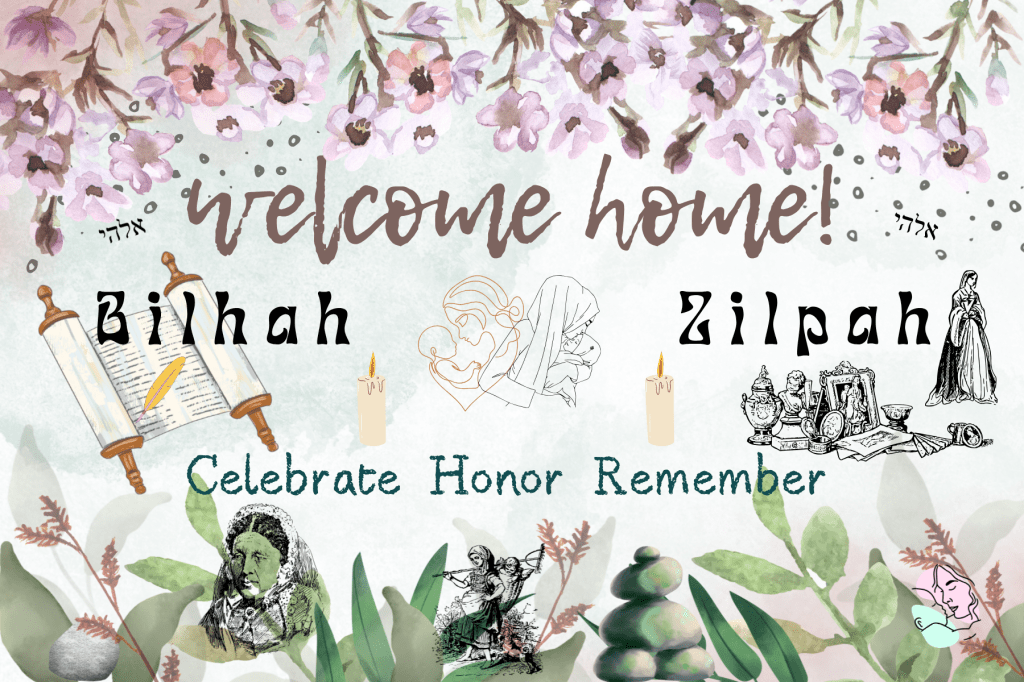
The Bilhah Zilpah Project grew from independent study that began in December 2020 into a flagship program of Jews of Color Sanctuary with the first annual Bilhah Zilpah Homecoming in 2023. This celebration of silenced Jewish matriarchs has become our biggest event of the year and our fundraising anchor. Bilhah and Zilpah enter the Torah each year in parashat Vayeitzei, which falls on the Shabbat after the Shabbat of the week of Sigd. Homecoming is scheduled before Vayeitzei to foster conversations about the many intersecting topics of this scholarship at institutions across the landscape of participant communities; this often means alignment between the Beta Israel holiday, Jews of Color Sanctuary’s anniversary, and centering Bilhah and Zilpah, a coincidence which feels deeply meaningful.
Registration for the Bilhah Zilpah Homecoming is open. Join us to welcome these matriarchs at three interactive online sessions of ritual dreaming and deepening relationship with the wisdom of Bilhah and Zilpah:
BILHAH & ZILPAH ENTER – 12-1:30pmET November 23: A Homecoming Celebration to welcome Bilhah & Zilpah as they enter the Torah in parashat Vayeitzei. This interactive session will deepen your relationship with the wisdom of these matriarchs, continue ritual dreaming, and mark the anniversary of Jews of Color Sanctuary.
MODERN MATRIARCHS – 3-4:30pmET December 7: Link the wisdom of Bilhah & Zilpah to women throughout history who have navigated kindred silences and lack of bodily autonomy. Explore how their voices can help us understand our modern lives, find community, survive marginalization, and realize abolition.
BILHAH & ZILPAH: ANCESTRAL STORIES – 3-4:30pmET December 21: Catch up on a year’s worth of learning focused on Bilhah & Zilpah through midrashic tales of ancestral connections, divine power, and generational wisdom for survival.
Shavua tov and welcome back into what I now think of as Bilhah Zilpah season. This is the first weekly email of this Bilhah Zilpah Project event which will serve both as some recap of our sweet five-year anniversary celebration and juicy text study.
That said, we each have experienced a year of life that has brought us to the moment and place where we stand today. Figuratively new people, even if not cellularly. This is one of the things I love about studying the Torah. It remains ever-alive, receiving us as we grow and change. Revealing more along our journey through lines that never change.
The bible is split into sections that are read at the same time each year. These biblical sections, called parasha (singular) / parshiot (plural), are named by their first word. Parashat Vayeitzei, which will be read community-wide this coming Shabbat, is named after it’s opening word וַיֵּצֵ֥א (Vayeitzei) He went out…, and is the story of Yaakov leaving home and starting a family.
Toldot, the parasha before Vayeitzei, read this past Shabbat, ends with Yaakov stealing his brother’s (Esav) birthright. Fearing that Esav will kill him, Yaakov is sent from his father’s home in Be’er Sheva to his maternal grandfather’s (Nahor) house in Harran, a city in Padan Aram, with instructions to choose a wife from his maternal uncle’s (Lavan) daughters. A lot of this drama is orchestrated by his mother.
Along the journey Yaakov has a vision of generations as numerous as dust, inheriting land, and becoming a blessing to his people. Arriving at the town well, Yaakov kisses and falls in love with Rachel and works seven years to marry her. Lavan marries Yaakov to Leah instead because she is older and well, Lavan is… let’s say crafty (directing the drama, like his sister). Yaakov is angry but agrees to work another seven years for Rachel.
Breishit (Genesis) 29:22-23 reveal that Lavan hosted a wedding party, where a lot of drinking was enjoyed, before taking Leah in the evening to the bridal tent and Yaakov came in to her. This is the framing of how we meet, first Zilpah, and then Bilhah. Although, it’s unclear if another party was gathered to celebrate the marriage to Rachel, the bride price of labor was exchanged.
Was Zilpah escorted over alongside Leah? Did Bilhah accompany Rachel? Or was this presentation of wedding gifts delivered separately? Was this a ritualized way of giving gifts? How do these lines relate to the custom of fathers walking daughters down wedding aisles or the custom of חֶדֶר יִיחוּד (cheder yichud) room of privacy where a newly married couple spends several minutes alone together.
I have long nurtured the reading that Zilpah and Bilhah being introduced in this way is foreshadowing of their becoming wives. A trace of ceremony in the absence of dowry or consent. Breishit 29:24 and 29:29 tell us that Lavan was giving his own slaves to his daughters. However, by the end of both verses, the second mention of בִתּ֖וֹ שִׁפְחָֽה (veto shifkha) his daughter as a slave / לָ֖הּ לְשִׁפְחָֽה (la l’isha) to heras a slave, could refer to Zilpah and Bilhah or Leah and Rachel. This treatment of women, including his daughters, could be in line with how Lavan is characterized. This is potentially reinforced in Breishit 31:14-15 when Rachel and Leah wonder if their worth has been used up or whether they are still valuable in the eyes of their father, as well as when Lavan catches up to the departing family when he declares ownership of everything in Breishit 31:43.
My years of scholarship has cultivated deep curiosity about the effective difference in status between Bilhah or Zilpah and Rachel or Leah. Given shifts in their role/status and owner, the nature of Bilhah’s and Zilpah’s enslavement is also a question. What was the nature of their service to Lavan? This is compounded through the usage of וַיִּתֵּ֤ן (vayitain) gave, a word I understand as gift, conflated in a transactional framework.
Vayeitzei, the parasha when Bilhah and Zilpah return to the narrative each year, is the where the central lines that evoke them consecutively reside: Breishit 30:3-30:13. While wealth is named elsewhere as cattle, slaves, and silver or gold, these lines highlight the currency of children. A commodity that left Leah feeling unvalued despite providing six valued sons and a lone named daughter. The lack of which made Rachel feel unfulfilled despite having Yaakov’s heart. Amidst the war raging between Rachel and Leah, Bilhah and Zilpah find ways to navigate their shifting status between slave, wife, and concubine AND maintain relationships with their children who are always attributed to them.
We are more than our circumstances. Bilhah and Zilpah were more than enslaved people, used as a sexual trade to be stripped of the wealth created through their bodies. We can read Bilhah and Zilpah as multidimensional characters who found ways to navigate the realities of their lives. As women who existed within relationships and left a wealth of legacies behind that help us navigate and enrich our lives today.
As Vayeitzei closes, Bilhah and Zilpah go out into the world—at least encountering the world between Padan Aram and Hakhanim in their traveling, dwelling, and working… and that is where we will dive into next…
How do you see the story…?
After our reading of Torat Bilhah v’Zilpah, we journaled on one of the following prompts:
Why and how are Bilhah or Zilpah meaningful for you or what is a lesson they help you learn?
What has going out meant for you in your life?
What homecomings have you experienced?
What makes a homecoming special/meaningful?
Imagine elements to welcome Bilhah and Zilpah grounded in your understanding of the text?
Where would Bilhah and Zilpah return to and who would welcome them?
NOTE: the last prompt came from a participant through chevruta and group conversation.
There is more Bilhah Zilpah Homecoming to experience! Register and join us for Witnessing Biblical Matriarchs on Sunday December 8, when we will connect with unexplored relationships between named and unnamed women in the story through creative midrash and set the foundation for ritual development; Witnessing Modern Matriarchs on Sunday December 22, which will link biblical matriarchs with historic and modern women and issues; and Weaving Matriarchal Legacies on Sunday December 29, where we will look to the generations and stories continuing to be woven together and return to ritual opportunities. We would love to study with you!
Welcome Home Bilhah & Zilpah!
Our learning was dedicated to:
Johanna Bromberg who attended this event last year; comments shared during Johanna’s funeral showed how much she supported Jewish learning
Ruth Meeron, an elder in our community
I usually think of my dad when I study Torah, because it was so important to him

 Jews of Color Sanctuary