THE NEW MOON LOOMS BLACK IN THE DARK SKY

Jordon Conner – Unsplash

The night sky has always been miraculous. Even before humanity came to understand the impact of the moon on earth’s seas, it is easy to understand how calendars began marking lunar time. While the location of the sun came to reveal the time of day, and the trajectory height of the sun’s path associated with the seasons, the moon’s changes in visibility governed cycles into months.

Thinking of the moon commonly conjures images of white fullness against a sea of black, a sphere of peace amid the תֹ֙הוּ֙ וָבֹ֔הוּ וְחֹ֖שֶׁךְ tohu v’vohu chaos and void (Genesis 1:2) of seeming endless blackness. Yet the Jewish holiday of Rosh Chodesh celebrates the arrival of a new Hebrew month with the birth of every new moon. Setting the month in the darkness of the new moon may follow the wisdom seeded within the Torah’s story of creation spanning from evening to evening, וַֽיְהִי־עֶ֥רֶב וַֽיְהִי־בֹ֖קֶר vayahi erev vayahi boker there was setting there was dawning (Genesis 1:5).

God calls for light and it appears. God proclaims the light good, makes distinct within the dark, naming light day and dark night. This binary separation and naming originating through the first day of creation (Genesis 1:4-5) repeats in the separation of the water of the heavens from the water of the seas (Genesis 1:6-8), sea from the first place of dry land (Genesis 1:9-10), and adding lanterns to further mark night and day (Genesis 1:14-18). Genesis 1:16 opens with God creating two great luminaries before immediately suggesting the larger light rule the day and the smaller rule the night.

As the story of creation continues, God brings forth grass, seeds, fruit trees, sun, moon, stars, water creepers, flying birds, sea monsters, herd animals, land animals, and humans (Genesis 1:2-27). Each introduction affected what was surrounding it.

All water on earth is connect to the seas. All water is affected by the gravitational pull of the moon. Yet, noticeable effects are increased or diminished by volume.

In Chullin 60b:2-4, Rabbi Shimon ben Pazi notes the contradiction between equality and what appears to be an immediate shift. Pazi shares midrash outlining an exchange between moon and God. It’s easy to wonder about the moon’s motives in questioning, and blame the lessening as a repercussion of confronting God. Making an analogy to the doctrine of separate but equal can offer another perspective of the moon as a body of light willing to speak up and call out separation presented as equal that is not.

There is more to be curious about in these lines–­–referencing kings (masculine plural) and speaking ‘to her’ in an equality framework, God’s ability to call forth creation and separation through words yet directing moon to diminish itself, humans bringing sacrifice to atone for a transgression of God, the stars being luminarily ignored, and linguistic associations with great-lesser and light-dark, for example. Amidst the questions, a beautiful aspect of this midrash is that God listens to moon, and continues to try to make reparations. In the culminating attempt, God notices moon is not comforted. God acknowledges the harm, attempts to make amends, and pays attention to the result.

This story could be minimized as cleaning up one’s mistake. This moment can also be read as allyship. Intentional, careless, and unconscious harm are distinct states. Making mistakes is inevitable and can happen through carelessness or unconsciously. How we respond is what matters most. We are theanthropic bodies affected by and affecting the world around us. This midrash invites us to pay attention when questions are raised, consider actions, and pay attention that an intention of solution lands as such. There’s also an unspoken message of mutual responsibility. Moon braves speaking up and God braves making repair. Along the way, both brave listening to the other.

Chodesh Tov Adar

Let Justice Well up again & again

Jews of Color Sanctuary partnership with Mayyim Hayyim entered its third year with the opening of Let Justice Well Up, a text study for Jewish women and nonbinary folks of color. This year we will explore our connection with the moon that moves tides, orders our Jewish calendar, and invites celebration of Shekhina, the female-centered aspect of the divine. Let the monthly blessing of Rosh Chodesh, birth of the new moon, wash over you through Jewish and secular texts welcoming us into ancient ritual and tradition to nourish our lives, creative practice, and personal ritual.

Register to join this affinity space for Jewish women and nonbinary folks of color on fourth Sundays through July between 9-10:30amPT / 12-1:30pmET / 6-7:30pmWAT / 7-8:30pmIT. Cost is self-determined sliding scale $36-$118. If cost is a barrier, please contact Soreh Ruffman at sorehr@mayyimhayyim.org.

  • Sunday February 23
  • Sunday March 23
  • Sunday April 27
  • Sunday May 25
  • Sunday June 22
  • Sunday July 27

EXCAVATING MATRIARCHAL LEGACIES – VAYIGASH

We gathered in a bittersweet and joyful closing homecoming session to hold and honor Bilhah and Zilpah. Over our month together, we shared the story of Bilhah and Zilpah; a narrative of being born into a system of enslavement, navigating life’s realities, finding identity in a sea of change, and creating better opportunities for our children.

In our first session, we read the lines of Vayeitzei that introduce Zilpah and Bilhah, foreshadow their marriage to Yaakov as they’re given to Leah and Rachel, and reveal how they are used to create children intended to be claimed by other women. We journaled about how/why Bilhah and Zilpah are meaningful in our lives and considered the meaning and actions of homecoming. We closed with a collectively created welcome home prayer:

Welcome home Zilpah & Bilhah! May we learn to listen for and hear your wisdom and wrap it around us in comfort that teaches us to value and nurture our daughters from birth to death. שְׁמַ֣ע בְּ֭נִי מוּסַ֣ר אָבִ֑יךָ וְאַל־תִּ֝טֹּ֗שׁ תּוֹרַ֥ת אִמֶּֽךָ׃ Listen, my son, to your father’s instruction and do not forsake your mother’s teaching. You have arrived! Welcome Zilpah! Welcome Bilhah! All of you is welcome here. This is a space of collaboration.

Our second session looked at the other women of Bilhah’s and Zilpah’s story in parashat Vayishlakh and considered their relationships. The possibility for understanding and care born from kindred experiences. We noted Dinah’s experience with rape and her marriage being determined by her brothers and her rapist. We noted the women of Shekhem’s experience of witnessing their men be executed followed by their enslavement along with their children. We noted the mention of another woman (Devora) who had given her life to serve the family featured in the narrative. We started to excavate ritual imagery.

During our third session we continued looking for women in the story. Parashat Vayeshev, when we did not meet, mentions Tamar’s experiences surviving a husband’s death and control over her ability to procreate by her father-in-law, Yaakov’s unnamed daughters, and Timna as the mother of someone named an enemy. Parashat Miketz added only one woman, Asenat who was given to marry Yosef. We considered archetypes as a framework to understand the messages embedded within the story and connected the experiences, wisdom, and legacies of modern matriarchs to biblical matriarchs.

Today’s gathering opened with Esther Rabbah 1:12, a source that acknowledges six matriarchs instead of four. We are dropped into a discussion about a royal throne which turns to a query of how many steps led up to it. Like all rabbinic debates there was contestation and clarification. Are there seven instead of six? This is a classic case of tread versus riser. An additional riser goes up to a floor level, which is not a step, culminating in one additional riser than tread, the standing surface of a step, in any stair. The bulk of the source lands on six stairs (treads) and then likens it to a list of groupings of six: lands, orders of Mishnah, days of creation, matriarchs, and mitzvot.

Then, we invoked the Amidah line of the matriarchs, itself an augmentation to the prayer service in the history of prayer evolution. We played on the personal meditation invitation of the Amidah to reflect on the Esther Rabbah source and how it felt to step into prayer development space. We reflected on how ritual relates to legacy.

Throughout the readings, Bilhah and Zilpah remain in the story, always attributed as the birth parents of their children. That continues in parahsat Vayigash which holds the first accounting of the descendants of Zilpah and Bilhah. As we have welcomed Bilhah and Zilpah into the space, we have brought along ancestors and personal and biblical figures who have been meaningful in our life. Attendees shared recent yartzeits, honoring the memory of a loved one who had died, recently observed or coming up. Father’s, mother’s, a brother, a grandfather, a sister-in-law, an aunt, and a grandma named Hannah, who died during Chanuka, whose yartzeit starts this evening soon filled the room with us. Some had experienced a lot of loss this year. Everyone named someone. This set the stage for reading Zilpah’s and Bilhah’s lineages, first in Vayigash, culminating in Numbers.

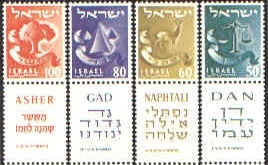
We lit a yizkor candle and read the accounting of the families growth as they traveled to Canaan and later to Egypt. We focused on Zilpah and Bilhah, and then Gad, Dan, Asher, and Naphtali. We looked at options that can be found in traditional yizkor memorializations as we considered borrowing from this ritual as a way to honor Bilhah and Zilpah. As Chag haBanot and Rosh Chodesh approach, celebrating Serakh, Zilpah’s granddaughter and an immortal Talmudic elder, emerged as a calendar time to anchor possible communal commemoration. We returned to previous ritual elements explored in session two as ways to anchor memory to source material. Yartzeit and yizkor both are times when donations are often made in the name of a person being remembered. This idea wove into supporting organizations who support women who have been silenced after sexualized violence, bridging biblical matriarchs into the continuing realities of our world today.

We closed with storytime of Serakh midrashic tales of singing secrets, clarifying the texture of the Sea of Reeds, revealing where Yosef was buried, and vouching for Moshe from her first-hand knowledge, as the elder of elders who left Egypt and returned. This rolled into a midrash of ברזל barzel (iron) being an acronym for Bilhah-Rachel-Zilpah-Leah, Yaakov’s four wives representing the sefira malchut. We parted to a recording of Lucille Clifton reciting “won’t you celebrate with me”.

This is the final weekly email that runs during the annual Bilhah Zilpah Homecoming. Stay connected with the Bilhah Zilpah Project throughout the rest of the year with monthly emails sharing insights from weekly study. You can sign up for email through the homecoming registration form or reply to this email.

Joyful wishes for a continuing Chanukah and Kwanzaa and a meaningful Chag haBanot and Rosh Chodesh Tevet. May our actions bring us closer to the world to come.