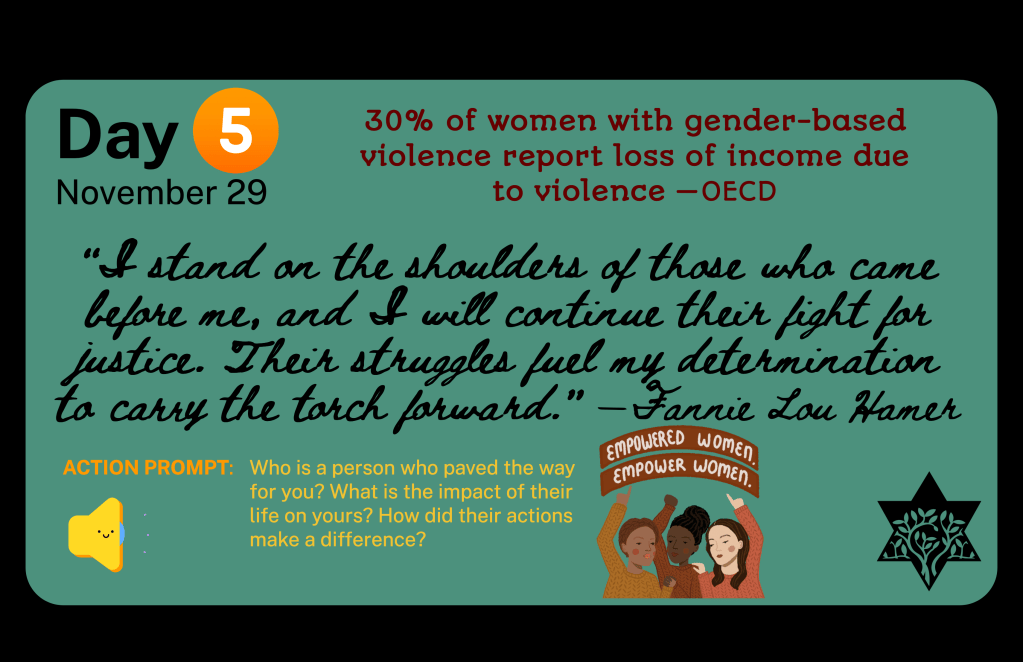
In Avodah Zarah 18a:14, the Gemara relates what B’rurya, daughter of Rabbi Hanina be Teradon and the wife of Rabbi Meir, said to her husband: It is disrespectful matter for me that my sister is sitting in a brothel; you must do something to save her. This line can spark spirited debate on what conditions might allow sex work to truly be a choice, or over Rabbi Meir’s decision to test the sister to ascertain if she had been used, in justification for saving her, but it remains, that a demand was issued by one sister to save another.
Each of us is able to occupy the spaces we dwell in because those before us paved some kind of path, even if the road is still treacherous. Along the way, we can choose to support those alongside us through mutual aid solidarity. B’rurya’s action can be understood in this way. She was aware of a need and she had resources she could employ to meet the need. She could have mourned the fate of her sister, among other local women who ended up at the brothel. She might have determined herself powerless as a woman without control over financial resources in an age when men were considered in charge of the public domain. Instead B’rurya stated her concern and acted to change it. She did something.
Safe Alternatives to Violent Environments (SAVE) is one organization providing safety, support, and resources for people to live free from Intimate Partner Violence. A big part of this can be having a place for women to go to. This can become more challenging when children are part of the transition.
The relationship to compromised finances can exacerbate the situation even more. This is where the history of minority banks can play a role. MinorityBank.com highlights the history of existing Asian, Black, Hispanic/Latinx, Native American, and Women owned/led-banks. One example is Mechanics & Farmers Bank founded in 1908 in Durham, NC. Rebranded as M&F, their tag-line is ‘empowering growth,’ evident through support of launches like Special Beginnings, a black-woman-owned birthing center, and Legacy Home Care Services, a black-woman-owned business helping individuals with disabilities live fuller and more independent lives. These financial institutions are governed like every bank. However, they also understand how issues may uniquely affect their primary constituents, and may assess risk more equitably.
How does your determination, the shoulders you stand on, and the ones you support relate to your reflection of the Day 5 statistic, prompt, and grounding quote…?
← Day 4 – Day 6 →


One thought on “16 DAYS OF ACTIVISM – DAY 5”